Honoring Black History Month: Richard Etheridge, Maritime Hero
Written by Mark J. Spalding (The Ocean Foundation) and Jordan Morgan (University of Maine School of Law)
In celebration of the 100th anniversary of Black History Month, we honor Richard Etheridge, a pioneering figure in American maritime history whose courage and leadership helped shape the legacy of the U.S. Life-Saving Service and Coast Guard.
From Slavery to Service
Richard Etheridge was born into slavery on North Carolina’s Roanoke Island on January 16, 1842. Thought to be the son of his enslaver, John B. Etheridge, Richard had an unconventional experience as an enslaved person. He was raised within the Etheridge household and taught to read and write, skills that would serve him throughout his remarkable life.
During the Civil War, Etheridge joined the Union effort in 1863, serving in the 36th U.S. Colored Infantry until 1866. His commitment to justice was evident even then. At one point, he advocated for Black residents of the Freedmen’s Colony, writing a letter to the Union commissioner protesting that white soldiers were breaking into homes and stealing possessions. He signed it “in behalf of humanity.”
After the war, Etheridge returned to Roanoke Island, married in 1867, and worked as a fisherman, farmer, and inlet pilot. In 1875, he joined the United States Life-Saving Service in an entry-level position, a role that was difficult for Black men to advance beyond at the time.
Breaking Barriers at Pea Island
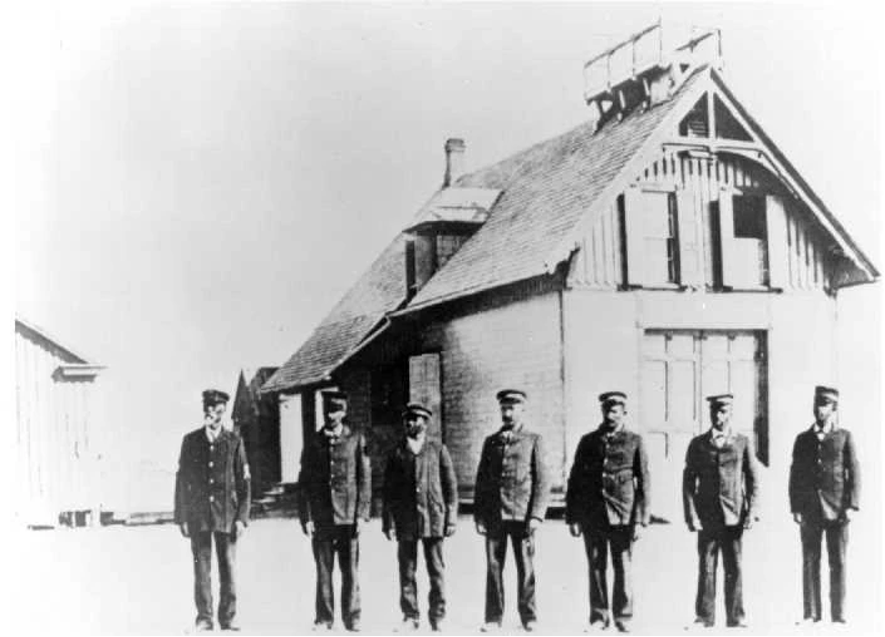
Through hard work and dedication, Etheridge rose through the ranks. After an extensive investigation found that previous keepers of Outer Banks Life-Saving Stations were ineffective, USLSS Superintendent Sumner Kimball appointed Richard Etheridge as Keeper of the Pea Island Life-Saving Station on January 24, 1880, making him the first African American lighthouse keeper and the first minority officer-in-charge of any U.S. base of operations.
Photo: The crew of the Pea Island Life Saving Station circa 1890. Richard Etheridge is pictured at left. U.S. Coast Guard Historian’s Office.
When the station’s white crewmembers resigned, African American surfmen from nearby units were brought to Pea Island, forming the first and only all-Black crew in the United States Life-Saving Service. Etheridge developed rigorous drills that enabled his crew to tackle all lifesaving tasks, and the station earned a reputation as “one of the tautest on the Carolina Coast.” He served as keeper for 20 years, longer than any other Pea Island keeper, and died while still serving his post.
The Heroic Rescue of the E.S. Newman
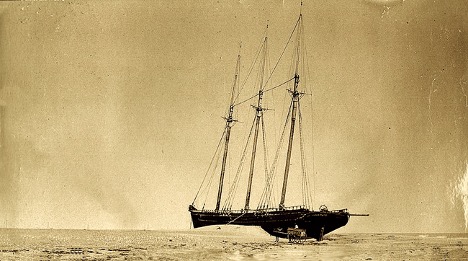
On the night of October 11, 1896, the schooner E.S. Newman, sailing from Providence, Rhode Island, ran aground amidst a hurricane. Unable to launch the lifeboat or fire the Lyle Gun due to the violent storm, Etheridge turned to sheer manpower as his final option.
Asking for two volunteer crew members, Etheridge commanded them to tie ropes around themselves and swim to the wreck while the remaining crew on shore held the ropes as a lifeline between land and sea. That night, the Pea Island crew rescued all nine people aboard the E.S. Newman, including the captain’s wife and his three-year-old son.
For their extraordinary heroism, Etheridge and his crew were posthumously awarded the U.S. Coast Guard’s Gold Life-Saving Medal in 1996, becoming the first minority Coast Guardsmen to receive a medal for heroism in the line of duty.
An Enduring Legacy
Etheridge’s service took place during Reconstruction, a volatile and dangerous time in American race relations. Just two years before he died in 1900, white supremacist riots in Wilmington, N.C., violently removed Black citizens from positions of power. Yet Pea Island continued to be staffed almost entirely by African Americans for 47 more years after Etheridge died, a legacy that extended far beyond the remote Outer Banks.
As Joan Collins, secretary of the Pea Island Preservation Society, noted, “Richard Etheridge opened the doors for so many African-Americans in this area to join the Coast Guard. For 67 years, Pea Island was staffed by African-Americans. Had he not been who he was and set the example he set, that would not have happened.”
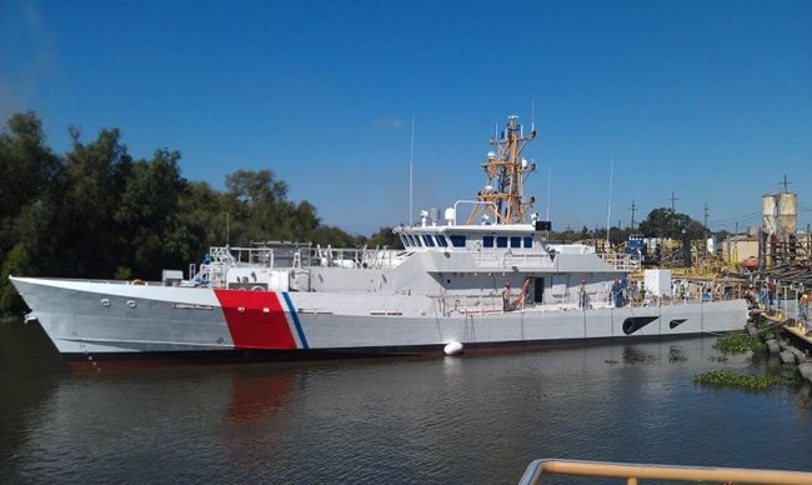
Today, Richard Etheridge’s name lives on. The USCGC Richard Etheridge, a Sentinel-class cutter, honors his memory and service. His story reminds us that courage, dedication, and excellence can overcome the barriers of prejudice, and that the contributions of Black Americans have been essential to our nation’s maritime heritage from the very beginning.
About Black History Month
This year marks the 100th anniversary of Black History Month, which can be traced back to the establishment of Negro History Week in February 1926 by Dr. Carter G. Woodson. Born in 1875 in Virginia to former slaves, Woodson earned a PhD in History from Harvard University and founded what is now the Association for the Study of African American Life and History. He selected February for this celebration because Black Americans had long honored the birthdays of two great Americans who played prominent roles in improving their lives: Abraham Lincoln (February 12) and Frederick Douglass (February 14).
Since 1986, when Congress designated February as National Black History Month, every U.S. President has issued proclamations recognizing this important observance. As President Reagan declared, “the foremost purpose of Black History Month is to make all Americans aware of this struggle for freedom and equal opportunity.”
Read More
Arab Maritime Heritage
Arab Maritime Heritage: Navigators of the Indian Ocean April has been recognized as Arab American Heritage Month. While it celebrates modern US communities, The Ocean Foundation would like to reflect …
TITANIC LAW AND POLICY: How a Shipwreck Changed International Law — and Why It Matters Today
On the night of April 14–15, 1912, more than 1,500 people died in the icy waters of the North Atlantic when the RMS Titanic slipped beneath the surface. The world …