TITANIC LAW AND POLICY: How a Shipwreck Changed International Law — and Why It Matters Today
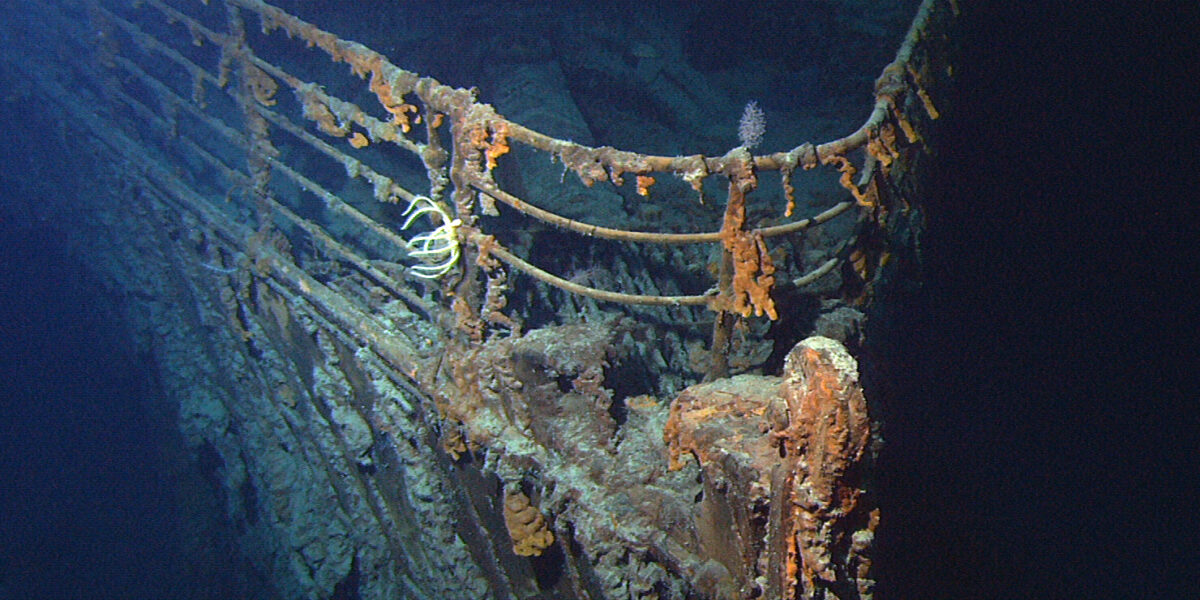
On the night of April 14–15, 1912, more than 1,500 people died in the icy waters of the North Atlantic when the RMS Titanic slipped beneath the surface. The world was stunned. Within hours, the tragedy was on the front pages of newspapers from London to Sydney — making it arguably the first global media disaster. For more than a century, we have wondered why it happened, who was responsible, and how to prevent such a catastrophe from happening again.
What is less well known is how Titanic changed the law — not once, but twice. First, in the wake of the disaster, governments changed maritime safety laws. And then, after the 1985 discovery of the wreck, which sparked a Titanic Memorial Act and legal battle over the right to salvage artifacts that may disturb the final resting place of all those people.
A Disaster That Rewrote the Rules of Safety at Sea
When the Titanic sank, it exposed frightening legal gaps in ship design, communications, staffing, and equipment. There weren’t enough lifeboats. The wireless operators were private contractors with no clear duty to relay distress calls. No international rules required ships to respond to emergency signals from nearby vessels. The Titanic‘s disaster report became a blueprint for change.
Both Britain and the US launched major investigations. This led to the Safety of Life at Sea (SOLAS) convention in 1914 — the first international agreement that continues to be amended and governs maritime safety. The requirements on lifeboats for all, a 24-hour radio watch, and that ships answer a distress call — all trace back to Titanic’s sinking. Louise Sanger explores these transformations in the Lloyd’s Register Foundation blog (https://www.lrfoundation.org.uk/news/from-disaster-to-framework-how-the-loss-of-titanic-reshaped-maritime-safety) and our upcoming book: Titanic Law and Policy: The Wreck’s Role in Changing International Maritime Safety and Salvage Law (Springer, 2026).

Found: A Wreck, and a New Legal Problem
For 73 years, Titanic rested undisturbed more than two miles beneath the Atlantic. Then, on September 1, 1985, a joint French-American expedition led by Dr. Bob Ballard sent back the first images of the wreck. The world stopped. Television networks broadcast the haunting footage. And almost immediately, a different kind of question arose: now that we can reach it, what should we do with it?
Dr. Ballard went directly to Congress, testified about the site’s significance, and asked that it be treated as a memorial. Congress agreed quickly enough that President Reagan signed the RMS Titanic Memorial Act into law just one year later, in October 1986. The Act called on the State Department and NOAA to develop an international agreement and guidelines for research and recovery or salvage to protect the site.
The Salvagers vs. the Preservationists
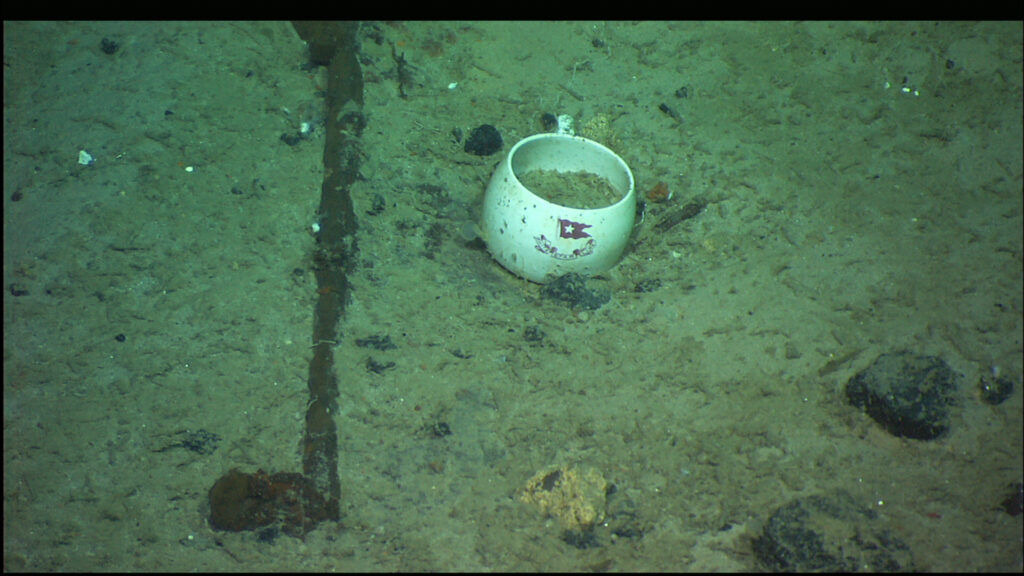
Titanic Ventures (later RMS Titanic Inc.) (RMST) convinced the French co-discoverers to salvage artifacts outside the two hull portions, conserve them, and put them on public display. This sparked a legal and ethical collision that would play out for decades in courtrooms, conference rooms, and international negotiations.
How does a US court have a say over a British wreck in international waters off the coast of Canada? It’s through admiralty jurisdiction, developed for cases on the high seas, and the law of salvage, dating back to ancient times. The US court was asked by salvors to exercise this authority over the salvage of Titanic, made possible by bringing artifacts within the court’s territory- the Eastern District of Virginia. RMST proposed salvage in the public interest, including keeping the collection together. Since then, the court has creatively integrated historic preservation law and archaeological standards into the law governing the salvage of Titanic and the conservation of the collection. The court has held them to their promises and invited NOAA as an amicus curiae — literally a ‘friend of the court’ — to represent the public interest.
A Titanic Agreement
The display of salvaged Titanic artifacts became a catalyst for a couple of agreements. Diplomats and heritage specialists agreed to work on agreements on a parallel track: 1) the US, UK, France, and Canada on Titanic, and 2) some 80 nations agreed to protect underwater cultural heritage, resulting in the UNESCO 2001 Convention.
The Agreement Concerning the Shipwrecked Vessel RMS Titanic was signed by the UK in 2003 and the US in 2004 and entered into force in 2019. It recognizes Titanic as a maritime memorial to those who died, and a site of historical importance. Activities by RMST and other US persons and vessels that disturb the wreck must be authorized by NOAA and comply with applicable rules and standards to ensure the public interest in Titanic is protected.

Why Any of This Matters
This Agreement protects an iconic wreck and is also a potential model for protecting significant heritage (natural and cultural) under the implementation of the High Seas Treaty (aka Biodiversity Beyond National Jurisdiction. There are an estimated three million shipwrecks on the ocean floor — many may be of enormous significance; many are gravesites of disasters and war. As deep-sea access becomes cheaper and easier, the legal and ethical questions raised in the case of Titanic are becoming more urgent, not less.
What Titanic‘s legal history shows is that protection, access, and controlled recovery are possible in the high seas. It took decades; it required lawyers, diplomats, and scientists working together; and it was opposed at every turn. But it worked. If you want to know more, The Ocean Foundation co-authors Ole Varmer and James P. Delgado trace this entire journey in the soon to be published book: Titanic Law and Policy: The Wreck’s Role in Changing International Maritime Safety and Salvage Law which will be open access and available to download for free thank to a grant from our partner – the Lloyd’s Register Foundation.
Read More
How Two Shipwrecks Connect the Present to the Emerging Global Market of Centuries Ago
The vast waters of the Pacific, while known to and sailed by Pacific Islanders for millennia, were not widely navigated by the rest of the world until half a millennium …
The National Academies Just Set the Record Straight on Ocean Observing
For the past two weeks, I have been writing, mostly on LinkedIn, about a decision I find genuinely hard to fathom: the United States is dismantling the Ocean Observatories Initiative …
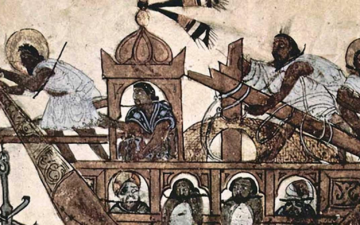
Arab Maritime Heritage
Arab Maritime Heritage: Navigators of the Indian Ocean April has been recognized as Arab American Heritage Month. While it celebrates modern US communities, The Ocean Foundation would like to reflect …