Women Lighthouse Keepers of the U.S.
About Women’s History Month
Women’s History Month originated from a local week-long celebration in California in 1978. The organizers chose the week of March 8th to correspond with International Women’s Day. This movement spread across the country as more communities began initiating their own Women’s History Weeks. Congress passed Public Law 100-9 in 1987, which designated March as Women’s History Month. Women’s History Month is a time to recognize and celebrate the vital contributions women have made to society, culture, and history–often in the face of exclusion and inequality. It reminds us that progress is shaped by countless women whose courage and dedication expanded opportunities for future generations and continue to inspire movements for equity and justice today.
Recognizing Women Lighthouse Keepers
For Women’s History Month, we recognize a group of trailblazers whose contributions have too often been overlooked: women lighthouse keepers. Along the United States’ coasts and waterways, these women maintained vital beacons of safety, saving lives and defying the expectations of their time.
Women lighthouse keepers were not just caretakers of the light; they were pioneers who defied societal norms and paved the way in a male-dominated maritime world. One of the first non-clerical U.S. government jobs open to women was that of lighthouse keeper. (U.S. Coast Guard, n.d.). No official policies prevented women from being lighthouse keepers. In many cases, the wives, sisters, and daughters of male keepers took over the responsibilities of maintaining the lighthouses when their male relatives fell ill or died. This resulted in some of the first women appointed in their own capacity as lighthouse keepers, allowing them to provide for their families themselves. Many of the women appointed served their country for many years, becoming trailblazers for other women in the maritime field during a time when employment for women was extremely limited. Between 1828 and 1905, at least 122 women held the official government position of lighthouse keeper. (Arlington National Cemetery, 2022).
Ida Lewis: A Trailblazer in Maritime History
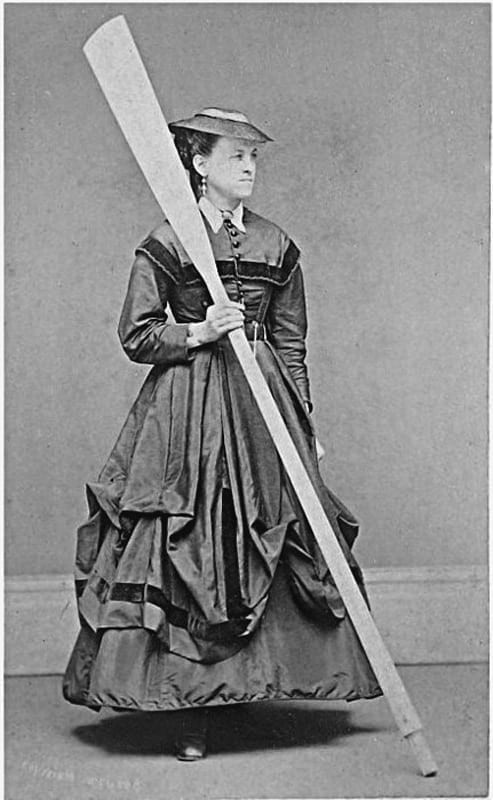
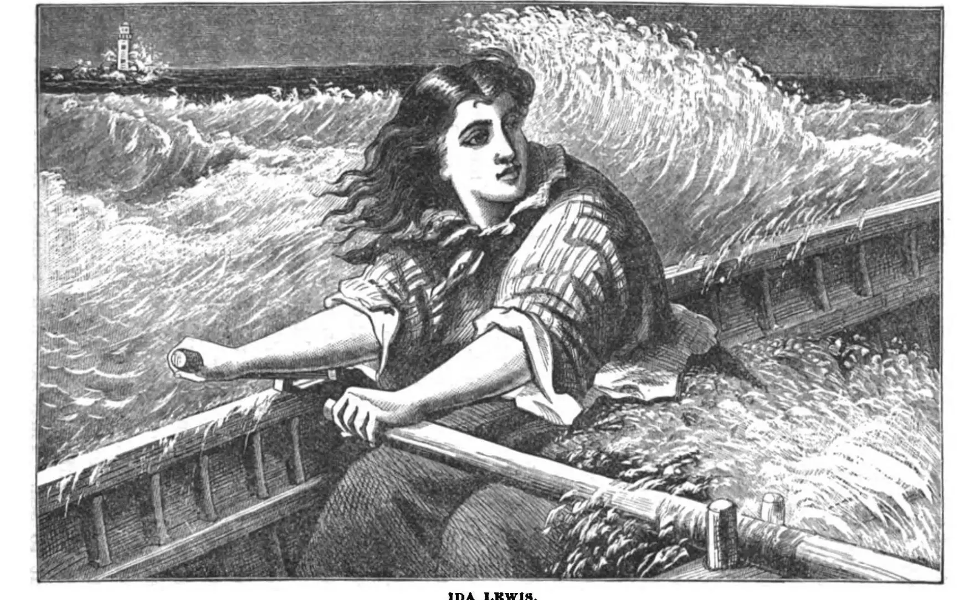
Idawalley (Ida) Lewis was the most famous female lighthouse keeper in U.S. history. She was the daughter of Captain Hosea Lewis, who served in the Revenue Cutter Service ––predecessor of the Coast Guard––which appointed him to guard the Lime Rock Light Station in 1853. In 1857, Hosea Lewis suffered a debilitating stroke, and his wife, Zoradia, became the lighthouse keeper. However, since Zoradia also had to care for her ailing husband and younger children, teenage Ida helped her mother manage her many duties with the lighthouse, which launched her future as a maritime hero. Ida Lewis began tending Lime Rock Lighthouse at age 15 alongside her parents, until 1879 when she was appointed its official keeper.
Ida Lewis was once known as “the bravest woman in America” and served as an official keeper of Lime Rock Light Station off the coast of Newport, Rhode Island, for the U.S. Lighthouse Service from 1879 until she died in 1911. (Arlington National Cemetery, 2022). Lewis’s fame and the public’s eager consumption of her image challenged prevailing cultural ideas about gender. Duties like lighting the lamp and patiently watching the coastline were often perceived as “domestic” duties, thus allowing women to serve as keepers without disrupting traditional notions of femininity for the time. Despite this, Lewis’s fame showed a more complex story: one of heroism.
Lewis helped protect the nation’s coastlines, and her diligence saved at least 18 lives during her years presiding over the lighthouse, including several soldiers from nearby Fort Adams. However, unofficial accounts hold that she saved as many as 36. (Arlington National Cemetery, 2022). Her work was so profound that in 1869, Lewis was awarded the Gold Lifesaving Medal by the Lighthouse Service, the nation’s highest lifesaving decoration, and was visited by President Ulysses S. Grant. Ida Lewis was the only woman to receive such an honor until 2020, when Ann Rothpletz was awarded the medal for rescuing a drowning fisherman in the Ohio River. (Arlington National Cemetery, 2022).
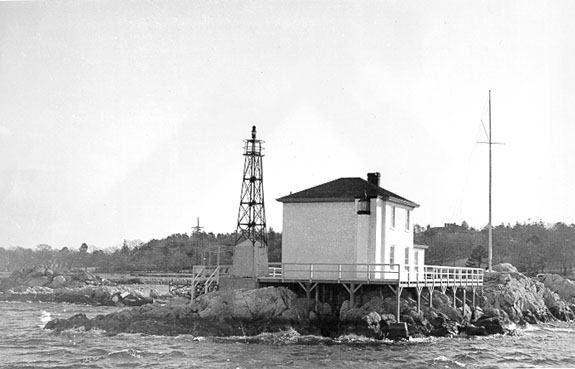
Lewis’s work was so revolutionary that in 1924, the Lighthouse Service changed the name of Lime Rock Light Station to Ida Lewis Rock Light Station. In addition, in 2018, Arlington National Cemetery dedicated its 27-acre Millennium site to her, making Lewis the first woman honored with a road in the cemetery named for her.
Venus Parker: The Continuation of Ida Lewis’s Legacy
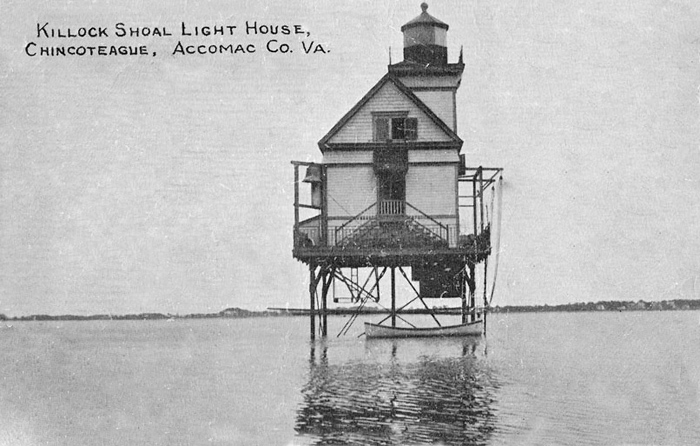
Ida Lewis’s role in maritime history helped pave the way for other women lighthouse keepers as well, including Venus Parker. Venus Parker is one of the few Black women we know of who kept lighthouses. She was the wife of William Major Parker, who was a prominent Black lighthouse keeper who overcame many racial challenges in his profession. From 1886 until 1911, William served as the keeper of Killock Shoal Lighthouse, offshore of Accomack County, Virginia. According to the Chesapeake chapter of the U.S. Lighthouse Society, when William died in 1912, Venus took over the responsibilities of running the lighthouse for several months. (Chesapeake Chapter). Although devastated by her husband’s death, Venus knew the importance of keeping the light shining.
Breaking Barriers at Sea: Honoring the Women Who Lit the Way
Women lighthouse keepers like Ida Lewis and Venus Parker exemplify the courage, dedication, and resilience that shaped America’s history. Their service not only safeguarded countless lives but also challenged the limits placed on women during a time of profound social inequality. As we honor Women’s History Month, their stories remind us that progress is often forged through steadfast commitment, bravery, and an unwavering determination to keep the light burning for others.
See also another blog honoring women lighthouse keepers near national marine sanctuaries by Elizabeth Moore: https://sanctuaries.noaa.gov/news/may23/beacons-of-history.html (Elizabeth Whitney Williams, Beaver Island Harbor Lighthouse and Little Traverse Lighthouse, Lake Michigan, Anna Garrity, Presque Isle Lighthouse, Lake Huron, Michigan, Rebecca and Abigail Bates, Scituate, Massachusetts, Venus Parker, Killick Shoal Light, Virginia Rebecca Flaherty, Sand Key Lighthouse, Florida, Laura Hecox, Santa Cruz Lighthouse, California, and Julia Williams, Santa Barbara Lighthouse, California)
Read More
Honoring Black History Month: Richard Etheridge, Maritime Hero
Written by Mark J. Spalding (The Ocean Foundation) and Jordan Morgan (University of Maine School of Law) In celebration of the 100th anniversary of Black History Month, we honor Richard …

The New NOAA Rule on Deep Seabed Mining: A Dangerous Shortcut That Undermines Ocean Stewardship
On 21 January 2026, the National Oceanic and Atmospheric Administration finalized a rule that could fundamentally alter the future of our global ocean—and not for the better. By consolidating exploration …
Statement on Environmental Risks from Shadow Fleet Operations in Caribbean Waters
Photo taken by Jeffry Surianto.