Arab Maritime Heritage
Arab Maritime Heritage: Navigators of the Indian Ocean
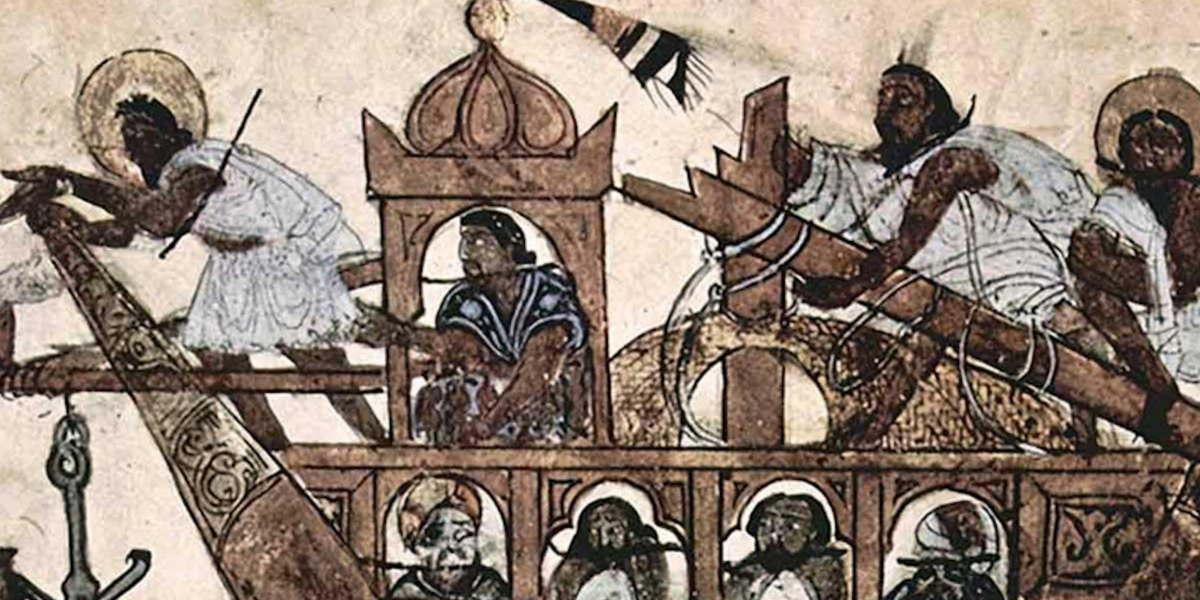
April has been recognized as Arab American Heritage Month. While it celebrates modern US communities, The Ocean Foundation would like to reflect on a deeper historical one that spans centuries of ocean navigation, particularly what mariners of the 15th century would call the Sea of India or the Indian Sea. See “What are the Seven Seas” (NOAA, Facts). Before the age of European exploration, Arab seafarers were among the most skilled navigators and traders in the world, dominating maritime commerce across the Indian Oceanfrom roughly the 7th to the 15th centuries. (How Arab Navigators Mapped the Indian Ocean before Europe). Of these Arab navigators, the greatest may be Ahmad Ibn Mājid, who has been lauded as The Lion of the Sea.
The History and Technology of Arab Seafarers
Arab sailors developed one of the most extensive maritime trade networks of the premodern world. Ancient Arab sea-traders controlled significant maritime trade by the 1st century BCE/CE bringing Indian spices and African products to Mediterranean markets. From ports along the Arabian Peninsula, they sailed across the seas that connect the coastal societies in East Africa, India, and Southeast Asia.
The planispheric astrolabe was invented in ancient Greece or Perga, depending on which source you rely. So, while Europe fell into its Dark Ages after the fall of the Roman Empire, Arabs were preserving and improving upon the developments of the Greek and Roman civilizations and making their own Arab contributions. Their ships, known as dhows, used distinctive lateen sails that revolutionized sailing by allowing these ships to sail against the wind, or “tack” as sailors call it. This enabled them to maneuver narrow waters and even harness the seasonal monsoon winds. During the Islamic Golden Age (mid-7th – mid-13th century), Arabs made advancements in many of the scientific inventions of classical antiquity, including the use of the astrolabe in navigation. Arab navigators avoided monsoon winds by sailing to India and Southeast Asia in the summer, and waiting to sail back in the winter. With improved technology, and this careful timing, Arab merchants thereby traveled thousands of miles across the open sea, well before European explorers, who began navigating the sea in the 15th century.
The maritime world of the Indian Ocean was not only an economic network but also a cultural one. Arab traders transported luxury goods such as spices, textiles, ivory, and precious metals between regions, often serving as middlemen connecting distant markets. (Apaydin, 2017). Centuries before European voyages reshaped global trade, Arab merchants were already facilitating exchanges between Africa, South Asia, and Southeast Asia. (Apaydin, 2017).
Along with goods, Arab sailors also carried ideas, religions, languages, and technologies. The spread of Islam across coastal regions of the Indian Ocean was closely connected to these maritime networks. Pilgrims traveling to the holy city of Mecca often relied on the expertise of experienced navigators to cross the seas safely. (Apaydin, 2017). Knowledge of astronomy and geography even helped sailors guide pilgrims in determining the direction of prayer during voyages. (Apaydin, 2017).
Ultimately, these networks helped create port cities where merchants from different cultures interacted regularly. Trade routes tied together societies thousands of miles apart, shaping the economic and cultural landscape of the region for centuries.
The Legacy of Ahmad Ibn Mājid
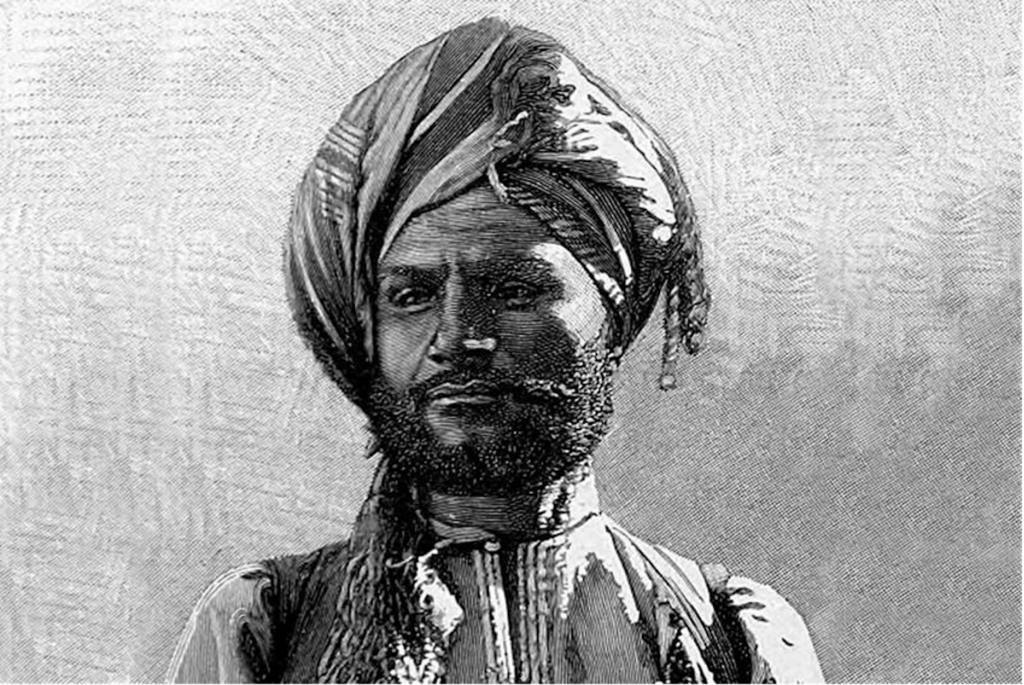
Among the most famous navigators of this maritime world was Ahmad Ibn Mājid, a fifteenth-century sailor often called the “Lion of the Sea.” Born in the port city of Julfar (in present-day Oman), he came from a family of navigators, with his father and grandfather both being experienced maritime pilots. (Byrd O’Connor, n.d.).
By his early twenties, Ibn Mājid had already written works on maritime science. Over his lifetime, he composed numerous navigational texts and instructional poems designed to help sailors memorize complex information about winds, stars, and sea routes. His most famous work, The Book of Benefits in the Principles of Navigation, served as an encyclopedia of maritime knowledge for the Indian Ocean, the Red Sea, the Persian Gulf, the Arabian Sea, and other major bodies of water known to the author. (Library of Congress, n.d.). Although Ibn Mājid’s writings were influential, they were also the product of centuries of accumulated knowledge passed down through generations of sailors. Much of this information had been preserved in poetic form so that navigators could memorize it during long voyages. (Byrd O’Connor, n.d.).
A Maritime Heritage Worth Remembering
The history of Arab seafaring reminds us that global exploration did not begin with European voyages. Long before the Age of Discovery, Arab navigators had already mapped sea routes, mastered monsoon navigation, and connected continents through trade and cultural exchange.
During Arab American Heritage Month, recognizing this maritime legacy highlights the long history of innovation, knowledge, and cross-cultural connection associated with Arab societies. From the sailors who guided ships across the monsoon seas to the modern Arab American communities contributing to science, diplomacy, and culture today, the story of Arab maritime history is one worth telling.
Read More
How Two Shipwrecks Connect the Present to the Emerging Global Market of Centuries Ago
The vast waters of the Pacific, while known to and sailed by Pacific Islanders for millennia, were not widely navigated by the rest of the world until half a millennium …
The National Academies Just Set the Record Straight on Ocean Observing
For the past two weeks, I have been writing, mostly on LinkedIn, about a decision I find genuinely hard to fathom: the United States is dismantling the Ocean Observatories Initiative …
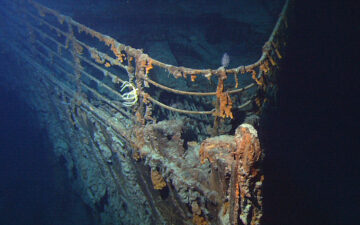
TITANIC LAW AND POLICY: How a Shipwreck Changed International Law — and Why It Matters Today
On the night of April 14–15, 1912, more than 1,500 people died in the icy waters of the North Atlantic when the RMS Titanic slipped beneath the surface. The world …